Thursday, December 3, 2020

Chapter 1: Section 1: Page 4: Line 17

With the deftness of long habit, he flipped Darby upside down, and held the flyweight lad dangling by the ankles out into empty space—"terra firma" by now being easily half a mile below—proceeding to lecture him on the many evils of looseness in one's expression, not least among them being the ease with which it may lead to profanity, and worse.

* * * * * * * * * *

Where to start?! I wouldn't want to be some boring normie and start at the beginning. I'd rather be like a great Greek poet and start in the middle! The middle, in this sentence, is "terra firma" which is actually actually the middle, considering the Chums of Chance are in the sky and I'm sure some adventure of theirs will have taken place (or will take place (or will have Took-en place (I just re-read The Hobbit so that one was for me. You can ignore it))) underground.

Now that I began briefly in the middle, I'll go back to the beginning and just take the sentence apart in a linear fashion. That's because I've read too many comic books in my time and that's their standard modus operandi. First page is a big splashy battle to attract the kid flipping through the unpurchased book and then the second page ditches that excitement for the boring beginning of the story. Most comic books don't realize that they don't have to present their story in this manner. It's so boring!

With "[w]ith the deftness of long habit," we see that Lindsay Noseworth is a huge bully who not only hands out demerits but threatens the safety of every person on board the Inconvenience. What good are demerits if threats of physical violence are parceled out as well?!

This entire scene reeks of the conservative's civility argument. "Please speak and act the way we think you should speak and act or else we will punch you in the nose or shoot you with our guns. Be civil, for God's sake!" If informality of speech might lead to cussing, what leads to bullying young people into obeying arbitrary rules that have nothing to do with morality or ethics?! Oh! Oh! I know the answer to this one! A low self-esteem or some innate fear which leads to a fervent need to control and dominate every situation! It's the rallying cry of the authoritarian! I bet Lindsay considers himself to be a whatever a Libertarian was in 1893. No wait! That would probably be an Anarchist! Lindsay's definitely not that!

Here's the difference between an Anarchist and a Libertarian: a Libertarian is an Anarchist when it comes to their own life but when somebody encroaches on their own individual liberty (not the liberty of the individual but their own personal liberty!), they expect there to be a law or government to stop that from happening. An Anarchist understands that true personal freedom means everybody is doing their own thing and can live with the, possibly, resulting chaos. A Libertarian believes in personal freedom for everybody as long as that personal freedom parallels their beliefs. A Libertarian ultimately needs some kind of bodyguard; an Anarchist defends themselves! That's why Libertarians usually turn out to be Authoritarians in disguise.

I know Anarchy is going to be a constant theme in this book! Even if that anarchy is really just activists organizing for social and economic justice and being labeled as anarchists by people who profit from the current status quo.

You might have noticed that I've refrained from swearing so far on this blog but not for any reasons regarding looseness in one's expression! I'm just trying to stay more in character! Grunion Guy...I mean, Anonymous Blog Writer doesn't swear as much as that other guy, the one that professes to be Grunion Guy but is really mostly just himself, Anonymous Blog Writer. Wait. What? Hmm, maybe if I confuse myself enough, I'll allow myself to start swearing again!

Chapter 1: Section 1: Page 4: Lines 15-16

 "Or shall we say ten? How many times," continued Lindsay Noseworth, second-in-command here and known for his impatience with all manifestations of slack, "have you been warned, Suckling, against informality of speech?"

* * * * * * * * * *

Oh boy doody how I dislike Lindsay Noseworth! My bong is practically bristling at his smug attitude! Or it would be if I owned a bong. The only time I ever smoked pot and it really affected me was with a bong. This was for two reasons: 1. I apparently don't know how to inhale; 2. I didn't know how to operate the carburetor. (Interesting fact about the word carburetor: it's way easier to spell than you'd initially think! Just don't get all fancy with it and Boom! Nailed it!) By not knowing about the carburetor and placing my hand over it, I was sucking on this two foot long bong without anything happening. So all this goofy smoke was building up in the bong but none of it could actually transfer to my lungs due to physics or something. Probably not chemistry. Chemistry took place later after my friend Karl smacked my hand off the carburetor as I was sucking and suddenly Dixie whistled! Oh my!

Anyway, I wasn't really into pot. But Lindsay still would have narced on me because I was into mushrooms and LSD. He would have been giving me demerits left and right and center! And I would have laughed and laughed and said, "Wait. Lindsay. Wait! Lindsay! Do you know, hee hee, how much, haw haw, your nose is worth?!" Then Lindsay would have said something which I totally wouldn't have argued with at all; he would have called me an idiot.

So Lindsay loves to enforce rules and won't tolerate fun and shenanigans. If Satan's lawyer were to present a case for Lindsay, just to, you know, get the debate going because Satan's lawyer is always the smartest guy in the room and believes nobody else ever thinks about anything or comes to their beliefs and decisions through thoughtful self-reflection based on lived experience and ethical considerations, I might—MIGHT!—agree that goofing around hundreds of feet in the sky could be dangerous. And that maybe somebody needs to be mature enough to yell "Settle down!" every now and again. But even if I might agree to that hypothetical argument from a patronizing hell-bound advocate, I'd still rankle at every interaction I had with Lindsay.

Oh! But then I'd realize that Lindsay doesn't seem to have a problem with Suckling hanging dangerously over the side of the airship (which we'll get even more proof of in a sentence or two!). Lindsay is concerned about "informality of speech"! After that, I'd feel a little bit ashamed of how much Lindsay might reside in me because while I didn't shame Darby for his comment "I can't hardly wait," I was awful critical of it! I suppose even the most chaotic of us need to realize that there's always going to be a small percentage of lawful in us. But I don't have to like it!

Fifteen to sixteen lines in and I don't think I've commented on how much I love the way Pynchon communicates things. Sure, sometimes he says something that makes me think I just lived through the ending of the movie Pi. But sometimes he says things like "known for his impatience with all manifestations of slack" and I think, "I can't believe nobody every talks about how humans orgasm from reading mere words."


Wednesday, December 2, 2020

Chapter 1: Section 1: Page 4: Line 14

 "For which you have just earned five more demerits!" advised a stern voice close to his ear, as he was abruptly seized from behind and lifted clear of the lifelines.

* * * * * * * * * *

Oh! A stern voice handing out demerits and stopping Darby from enjoying life? Time to meet the stick-in-the-mud member of the Chums of Chance! Imagine this: three characters are introduced in the first fourteen lines of a novel and you already know who the best character is (Darby!) and who the worst character is (this demerit wielding chunder dud!)! Even if you're the total opposite of me and you're into rules and regulations and stopping people from sucking the marrow out of life, you'd still think, "Well, I now know who the worst and best characters are in this book! That little snot Darby is a chaotic little troublemaker who is bound to be the downfall of all mankind! Based on the use of the word 'more' modifying the word 'demerits,' this isn't the first time the little scoundrel has been caught putting the crew's lives in danger with his chaotic outbursts of pure joy! While this new character here is the model of decent and respectable citizenry! Good show! Can't fault somebody for a good tut!"

Earlier when the lifelines were mentioned, I just thought, "Oh, that's just more nautical terms for parts of ships I probably don't really need to understand." But now I see that there was a reason for using that term! Here, Darby is ecstatically enjoying his existence! He is embracing all that life has to offer! And then here comes this dour kid, pulling him away from that joy, "lifting him clear of the lifelines." I bet this kid's name will be Hal Monitor.

Man, I really dislike this new kid! Boo! Hiss! Suck it!

Chapter 1: Section 1: Page 4: Line 13

 "I can't hardly wait!" he exclaimed.

* * * * * * * * * *

"I can wait" means a person has the patience to remain calm until the moment something happens.

"I can hardly wait" means a person is antsy, knowing they must wait, but is discomfited by the process, only just holding back.

"I can't wait" means a person feels they must act, or the thing they are expecting must happen immediately or they will perish (in dramatic fashion! Not literally!).

Which means "I can't hardly wait" means, um, I guess the exact same thing as "I can't wait" and also "I can hardly wait." I think because "hardly wait" is just a more dramatic "wait," right? Darby can't wait nor can he hardly wait. He's so excited that he sounds exactly like the baby he is when he gets the common phrase "I can hardly wait!" incorrect. I'm sure many people say "I can't hardly wait!" but those people are probably the babies in their group of peers and just don't understand language.

I mean, I thought I understood language and then I tried to parse "I can't hardly wait" and now I'm not so sure. Have I always been the baby in my peer group?! Time for some self-reflection!

Chapter 1: Section 1: Page 3-4: Line 12

 (Darby, as my faithful readers will remember, was the "baby" of the crew, and served as both factotum and mascotte, singing as well the difficult treble parts whenever these adolescent aeronauts found it impossible to contain song of some kind.)

* * * * * * * * * *

What just happened here? What is this parenthetical reference doing to me?! After thinking I was just sitting here reading a book for the first 11 lines, am I now supposed to think I've been sitting cross-legged on the floor while a man in a smoking jacket sitting before a fire reads from a huge tome, interrupting himself every few paragraphs to take a few short puffs off his pipe? Okay, fine, he says "readers" and not "listeners" but I'm a terrible "reader" so sometimes I jump to stupid conclusions. Anyway you're missing the point! What the hell just happened here?!

When you pick up a book, you're asked to enter the world of the novel, to suspend the part of your brain that is constantly saying things like "If Ripley survives this fight against the mother alien, this movie is unbelievable." (I couldn't think of a book reference so you get a movie reference.) I mean, your brain made it up until that point believing a ton of crazy things! Whose fault is it when some incident (either by itself or the accumulation of previous nearly unbelievable incidents) cracks you straight out of the fantasy? Sometimes you really have to work harder than the author to make sure your disbelief remains suspended. So why would Pynchon do this to me?!

For eleven lines, I was all, "What a cool world! I totally believe these kids, in 1893, are flying around the world in a ship going on government missions and dressing like American flags! I wonder if some of them will kiss?!" And for eleven lines, I was happy! I was content! I was snuggled up warmly in the belief that this America exists! And then Pynchon is all, "Hey. By the way, these kids are characters in a book. Not the book you're reading! But a series of books [how else can a reader be "faithful" if not by coming back, book after book, in a cherished series?]." And then I was all, "Let me get this straight. Am I supposed to believe these kids are just characters in a fictional book or am I supposed to read this knowing that they're characters in a fictional book while also being characters in a real book? I don't know if I have the emotional rigor to digest and cope with this information."

Also, I'm supposed to have read the Chums of Chance's previous adventures?! I guess what Pynchon is saying is that I'm not a faithful reader because, no matter how hard I strained my suspension of disbelief, I couldn't remember that Darby was the baby.

The other thing Pynchon asks us to believe is that these kids often break out into song like they're living in a musical. Now that's something I can buy into!

Putting the word "baby" in quotes probably means Darby isn't really a baby; he's just the youngest member of the crew. But, I mean, who would have taken this narrator slash author literally if he'd left the word "baby" out of quotation marks? I'm being asked to believe a lot of stuff (and I'll soon be asked to believe in a dog who loves to read books about dogs having adventures), so why shouldn't I think I'm being asked to believe Darby is an actual baby! I mean, why not?! Remember, faithful readers, how many things I was asked to believe while reading Gravity's Rainbow?! Sometimes I feel like Pynchon is sitting on my chest slowly letting a long strand of drool dangle from his mouth directly over mine while simultaneously holding my wrist and forcing me to slap myself in the face while chanting, "Stop hitting yourself!" Also that's a compliment. I apparently love having those things done to me.

Seriously though. If this novel ends on a Muppet Babies scene where these kids are all hanging out in a playroom at their daycare imagining being on an airship while Baby Darby poops himself in the corner giggling like a moron, I totally won't be surprised. Of course not! If the book ends that way, I'm going to print up this blog entry and run around the city screaming, "I totally guessed where this Pynchon novel was going by Line 12! Who's the genius? Grunion Guy's the genius!" And then somebody will probably scowl at me and say, "Of course Grunion Guy's a genius! That's the literal definition of genius! But he probably isn't smart! Jerko!"

Tuesday, December 1, 2020

Chapter 1: Section 1: Page 3: Line 11

 "Oh, boy!" cried Darby Suckling, as he leaned over the lifelines to watch the national heartland deeply swung in a whirling blur of green far below, his tow-colored locks streaming in the wind past the gondola like a banner to leeward.

* * * * * * * * * *

Darby is only the second character introduced so it might not be that revealing when I say that he's my favorite character so far! The name "Randolph St. Cosmo" makes me think of tucking in my shirt and getting my knuckles rapped by a ruler for not tucking in my shirt like I was supposed to. But the name "Darby Suckling" makes me think of shoe polish and baby pigs! And those things remind me of totally untucked shirts which is a huge part of my life's philosophy.

The term "national heartland" seems like one of those terms that people never really thought much about and used it in such a cavalier way that it grew into a monstrous mutant that now threatens all of our political discussions. The problem is that the definition of heartland is both "the central part of the US" and "the central or most important part of a country." That seems like a mistake, right? It's like if the definition of "genius" was "a super smart person with tons of smarts" and another definition of "genius" was "Grunion Guy." It wouldn't mean I, Grunion Guy, were automatically both definitions just because the second definition defined me. But over time, how could you not simply equate Grunion Guy with a super smart person with tons of smarts? It couldn't be helped! Well, that's what's happened here! A bunch of media jerkos think "the central part of the US" is equivalent to "the most important part of a country" and now we get a never-ending cycle of articles about how important they are to the United States! No wonder some smart mouth came up with the term "flyover states" to replace "the heartland." That guy was a genius! No, it wasn't me! I meant the first definition of genius!

Darby is blond. That might become important later. Or it was just to help flesh out the colorful description of this boy about to fall to his death because he's so excited about visiting the Columbian Exposition. He also might have long hair since it's streaming past the gondola and as long as a banner. But were young boys allowed to have long hair in 1893? I bet it was almost a demand of the Victorian Era to not cut young boys hair until they reached a certain age. That seems like the kind of thing I imagine about the Victorian Era that nobody ever corrects me on because I never discuss my non-researched and totally ignorant vision of that time. Most of what I know about the Victorian Era I learned from The Age of Innocence, Oscar Wilde, and The League of Extraordinary Gentlemen.


Never let it be said that I never ever do any research (even if it's me who is always saying that)! Here is a picture I found on a Tripod website which describes the picture as having been taken at exactly the time Darby is hanging halfway over the side of the Inconvenience. The site (which I'm sure has been rigorously researched by top academicians) also states of Victorian and Edwardian times, "Some mothers might wait until a boy was 10 or even 11 before allowing him to have his long curls cutting." So I'm convinced! Darby has super cute long blond hair and his character has advanced even further in my estimation!

Bonus: if you visit that Tripod site, there is a picture of a young Thomas Wolfe with beautiful sausage curls. The caption doesn't expressly state that it's Thomas Wolfe but it looks just like him so I think the implication that it is him must stand.

Chapter 1: Section 1: Page 3: Line 10

 Since their orders had come through, the "scuttlebutt" among the excited and curious crew had been of little besides the fabled "White City," its great Ferris wheel, alabaster temples of commerce and industry, sparkling lagoons, and the thousand more such wonders, of both a scientific and an artistic nature, which awaited them there.

* * * * * * * * * *

Just before beginning Against the Day, my best friend (I know he's my best friend because he once called me his best friend while on the phone with some other guy who thought he was his best friend and that guy was immediately saddened by the entire interaction. Aside from all that proof, all of my friends are my best friends so I just say "best friend" when I could easily just say "person whose balls I bust but they keep talking to me for some reason anyway") said, "You should re-read Jimmy Corrigan first!" And while I took that into consideration, I also didn't want to spend the next few days sobbing uncontrollably. But the suggestion was enough to get the point across: Against the Day was going to have something to do with the 1893 Columbian Exposition in Chicago! Or it was going to have a three legged horse in it.

The event was such a tremendous success, such a humongous feather in the city's cap, that it was represented on the flag of Chicago as a gigantic asterisk.


The asterisks represent great moments in Chicago's history. In 1893 (when the flag was introduced for the Fair, I believe (I add "I believe" every time I comment on history because the only knowledge I'm sure of is my knowledge of Mirkwood)), Chicago only had two great moments: the Columbian Exhibition and a fire that destroyed most of the city. By 2020, the amount of things Chicago would be celebrated for (and thus represented by more asterisks) will have grown to four! Congratulations on being so historic, Chicago!

While researching this flag that most people would look at and forget about instantly, I discovered that people think it's iconic and often get it as a tattoo. I wonder what my tattoo would look like if I were proud of the city where I grew up?


Yeesh. This feels like something a bunch of junior high class officers would have come up with for their school flag. Why hasn't it been redesigned for the modern era? Maybe stick an Atari 2600 on it, for God's sake.

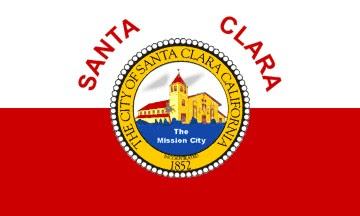
I apologize to Chicago for dumping on their flag. I appreciate the subtlety and the symbolism now that I've seen my city's flag and it's "Here's the name of our city! And the seal that again establishes the name of the city! And also that it's a city! And what state it's in!" At least it's got a picture of one of the buildings I used to grind my skateboard across as a kid.

This entry is really getting away from me! I'm sorry!

One of the important things we learn from this sentence is that the Chums of Chance receive orders from some organization or government or secret society. My guess is they work for the United States Government because they're all so patriotic.

"Scuttlebutt" is in quotes because Pynchon is using its slang meaning here which is "gossip" as opposed to the original meaning which is "office water cooler on a ship." It's also a funny word to say and would have been the name of my child if I'd ever had one. If I were willing to reveal my last name, I'd bet you'd really get a kick out of it! I bet my best friends are giggling a lot right now!

The rest of the sentence just tells the dimwitted readers of this Pynchon novel (who are dimwitted compared to Pynchon but probably brightwitted compared to people who don't read Pynchon, the dullards!) what to expect at the Chicago World's Fair of 1893. So many wonders! I hope they miss out on the greatest wonder of them all: H. H. Holmes!

Get used to it. I'm going to keep bringing up that monster! He's got to make an appearance in this thing, right?! Or is that too easy a reference for Pynchon?!